Three things that make a difference…
I am a curious person. Always have been, and I hope I always will be.Curiosity is a creative state of ignorance. Whilst curiosity and ignorance are similar states of mind, both have very different somatic implications. At school there seemed to be so much I didn’t know. When asked a question by the teacher I was always last to feign an answer. If asked directly I would freeze with embarrassment, eventually responding with… I don’t know…I felt ignorant, stupid and inadequate. I thought everyone else had reached the same conclusion about me. My body was immobilized, my mind a complete blank. At the same time my heart raced and pounded so hard it might have beaten me to death. Curiosity, a similar state of ‘not knowing’, feels completely different.It’s closer to a state of wonderment, of awe. Filled with curiosity, my body feels loose and mobile. My eyes and ears remain open to every bit of information and I am eager to know what something looks like, sounds like, feels like, smells like and tastes like.
Room with a view
In my mind I’m in an empty room.
It’s only contents, a folding chair and a bare wooden table which has at it’s center a white postcard.
The chair has been painstakingly restored with wax and wire-wool, it’s surface resonant of honey.
Sunlight warms the floorboards, sliding silently through the bay window. I watch it negotiate it’s way across sill and wall, quiet and peaceful as an opportunist cat.
A good place to think, and to write about passion and creativity, relationships, art, language and therapy.
Memo
A new day. A clean page, a fresh start. Now after weeks of deliberation over web hosting and domain names I can finally leave this little message. A postcard, thirty-nine words.Left on the table of a new home.
Thought is embodied
Thought emerges from the body. Out of muscle and tissue.Carried at speed to the pigeon hole of consciousness across miles of nerve fibers as widespread as the white, threadlike mycelium that holds together the forest floor.Bodies have their own non-verbal language, holding and maintaining life stories. Implicit memories of experiences that mould postures and animate movements. Past experiences continue to shape and direct our lives until through conscious awareness, we pause and review our embodied stories, our embodied thoughts. Yesterday someone drew my attention to a quote from the Bell Jar by Sylvia Plath. Plath sees her life branching out before her like a green fig tree. At the end of each branch: “a fat purple fig, a wonderful future beckoned and winked.” Plath lists what for her each fig represents, a happy home, a husband, friends, lovers, aspects of her professional life, various countries etc, and above each fig are other unknown figs. Plath sees herself: “sitting in the crotch of this fig tree, starving to death, just because I couldn’t make up my mind which of the figs I would choose” Plath felt that choosing one meant loosing all the rest. She describes her agony:
Lessons from an Existential blackbird …
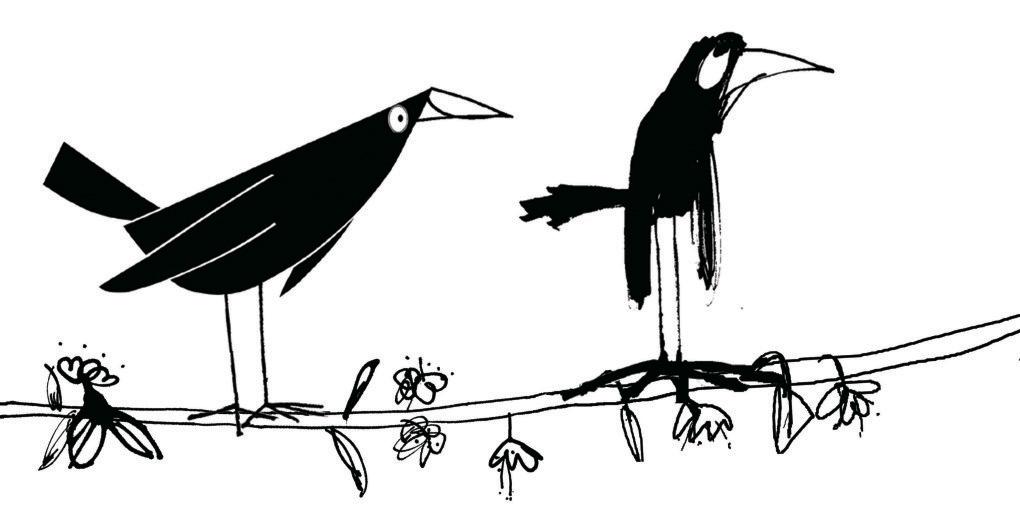
life is what you make of it …